
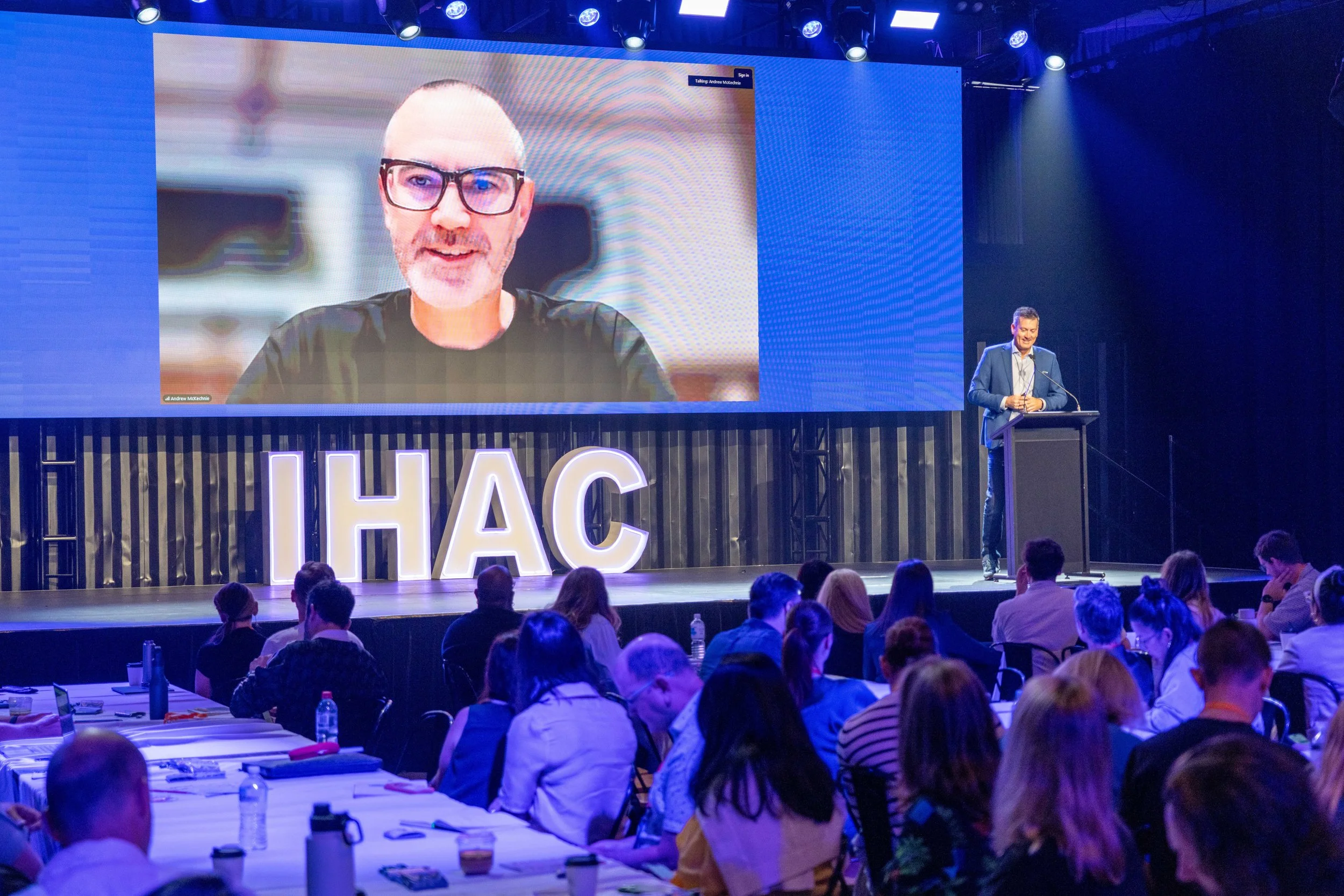
Andrew McKechnie, OpenAI & Chris Maxwell, -lution
Andrew McKechnie joined the Summit virtually to share how he thinks about building in-house creative teams, and how OpenAI's own creative team is changing the way it works.
Key takeaways
1. Start with where the business is. Every in-house build depends on the company's life cycle: does it need to stabilise, transform or scale? There's no repeatable playbook, so build in the flexibility to suit where the business will be in a year or two.
2. Hire for comfort with ambiguity. Craft and kindness matter, but above all Andrew looks for people who are comfortable with change and can move between high-profile campaigns and foundational basics. Hiring fast means you'll make mistakes, so be clear on the cultural principles you're hiring for.
3. Prototype early. Agents have cut "deck hell" and the time spent chasing information. Over the past three months the team has moved to a "prototype culture", prototyping even at the briefing stage. Producers, editors and strategists all prototype, and the boundaries between roles are falling.
4. Know healthy ambiguity from unhealthy ambiguity. Healthy ambiguity means using judgement rather than waiting for all the information. Unhealthy ambiguity is when "creative is being used as a bit of a canary in the mine shaft in terms of getting to decisions that should have been made earlier in the process". Without creative at the strategy table, Andrew said, it will likely stay "an executional arm versus a strategic arm".
5. New categories need the "why" first. Before any campaign, groundwork on why the category matters comes first. And human craft still counts: OpenAI continues to work with directors, and an audience question noted that one of its productions was shot on 35mm film.
The takeaway for your team: if creative only sees the work at execution, the decisions have already been made. Earn the seat earlier, and prototype your way into the conversation.
